

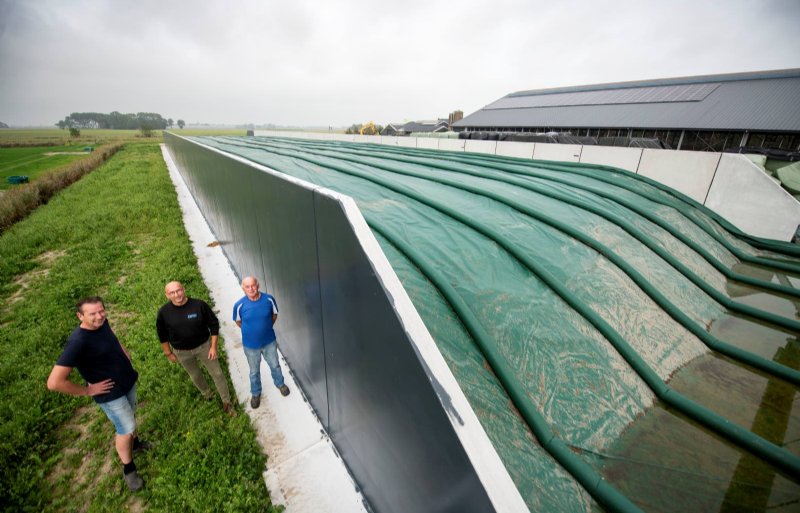
A lasagna pit without major investment
Agridek appeared in the latest edition of Veeteelt with an article about lasagna pits. The benefits are clear, but how do you cover them in a labour-friendly way when you have several smaller bunker silos? Veeteelt looked into it together with Agridek. Read the full article here.
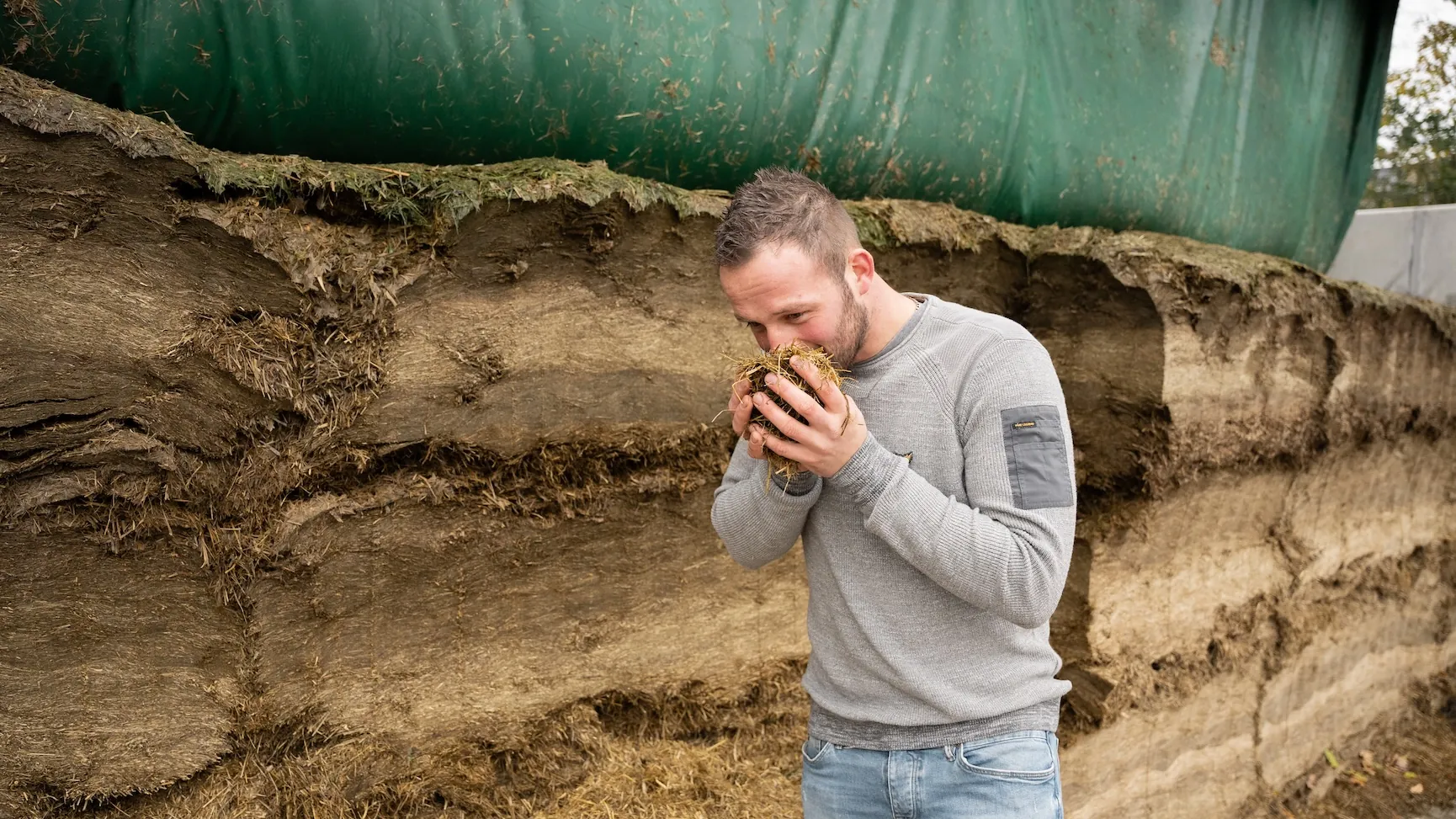
Dairy farmers with several smaller bunker silos often don’t make lasagna pits. Yet with smart, affordable covering equipment, it’s perfectly possible for them too, says Jan Sake Bosch of Agridek BV.
Many dairy farmers today want to make a lasagna pit, says Agridek BV director Jan Sake Bosch, based in Joure. “The land provides everything a cow needs over the course of a year. You simply can’t get more consistent and complete roughage than that.”
Yet Bosch still encounters many dairy farmers who use traditional ensiling methods. “Three or four smaller bunker silos side by side, fill them up, cover them once, done, no fuss. When I speak to them, they know the benefits of a lasagna pit, but the thought of lugging heavy sandbags or car tyres puts them right off.” That’s simply part of opening and closing lasagna pits multiple times. “People often think a new large silo with our portal or rail system and a permanent covering sheet is the only option. It can be done that way, of course, but it usually involves building a new bunker silo and that means additional investment.”
Less work with silage tubes
Bosch explains there’s an alternative solution. “That’s our silage tubes. With a set of two tubes, you’re sorted for between €2,000 and €3,000 per silo and you’re instantly free of all that hassle with sandbags and tyres.” He shows a video on the Agridek website. “Look, this dairy farmer has several bunker silos. Previously it went like this: first cut in the first silo, second cut in the second, third in the third, and so on. That meant opening multiple clamps in winter, which costs you quality and feed speed.”
The video shows how everything changed once the farmer started using silage tubes. He now spreads the first cut across two or three silos, and does the same with each subsequent cut. The result: a lasagna pit in multiple silos. “He no longer has to open several silos at the same time in winter, so his feed speed is now much higher.”
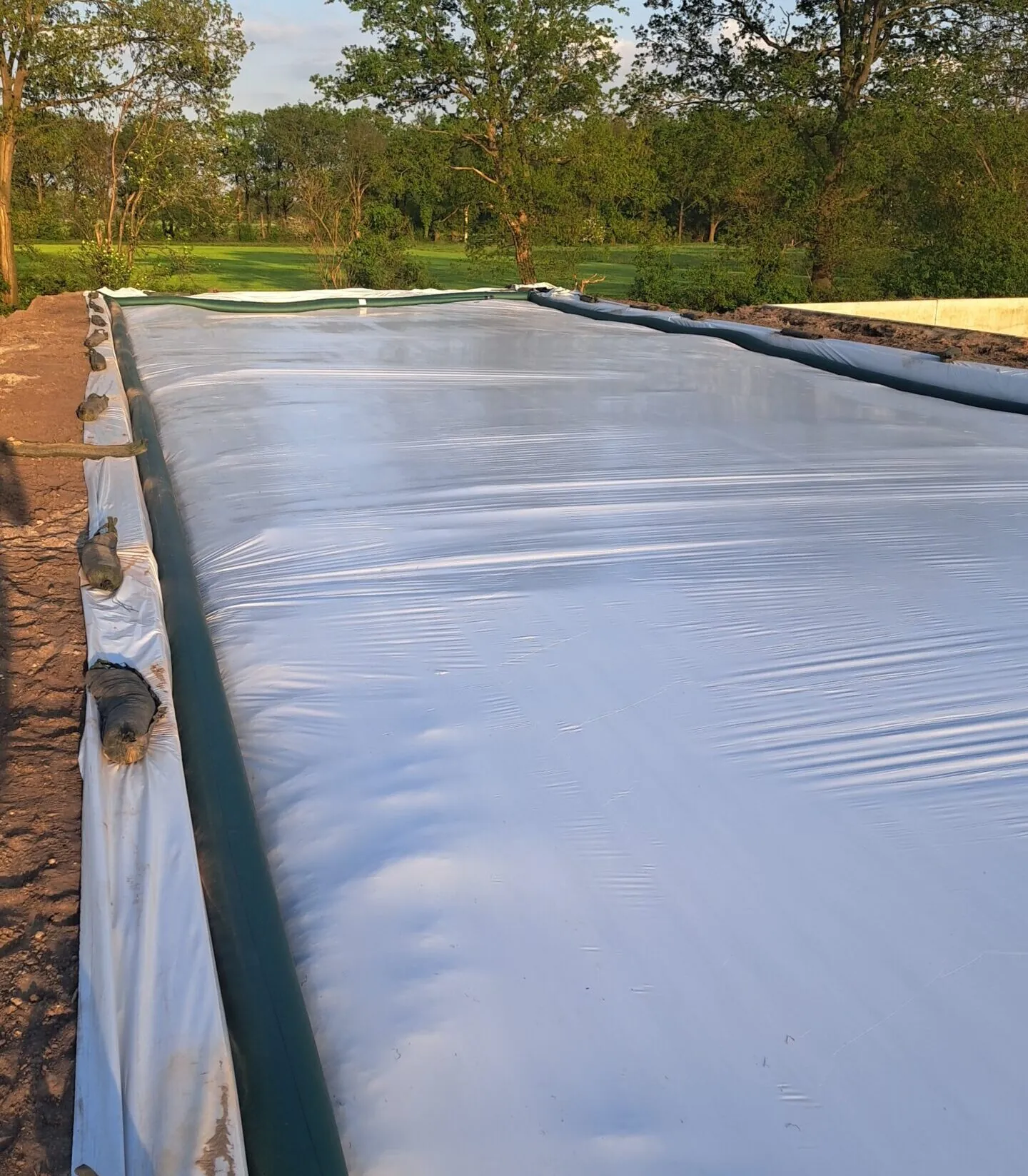
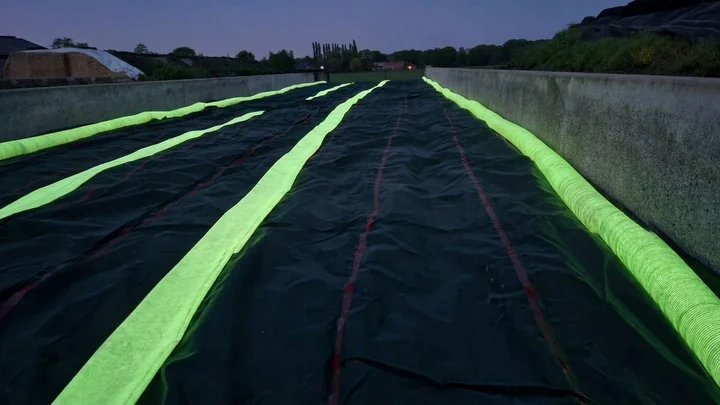
The individual silage tubes have a diameter of 23 cm and are available from stock in lengths of 30 to 75 metres, in steps of 5 metres. “An empty 50-metre tube weighs just 42 kg. Filled with 41 litres of water per metre, sealing with two silage tubes puts more than 4 tonnes of weight on the lasagna pit. That’s significantly more than hundreds of sandbags.”
More consistent roughage quality
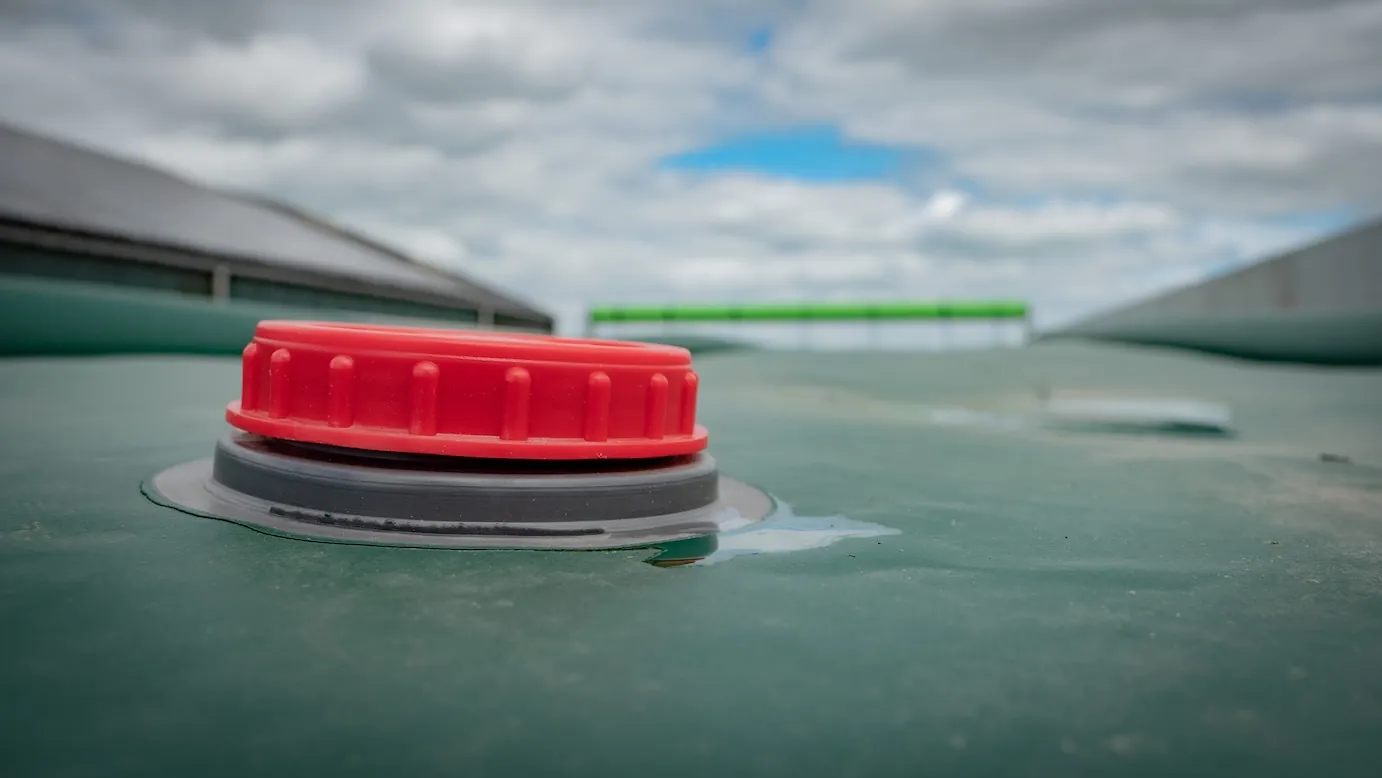
After ensiling, the agricultural plastic and windshields go over the pit first, then two silage tubes lengthways on either side. To position the tubes correctly, a small groove is needed along the walls. “Fill the tubes with water and you’re done,” says Bosch. Both ends have a large opening, so when you open the pit the water drains completely within seconds. The silage tubes can be combined with a reel system, making rolling up the sheet and tubes quick and easy. A reel system with interchangeable rolls is also an option.
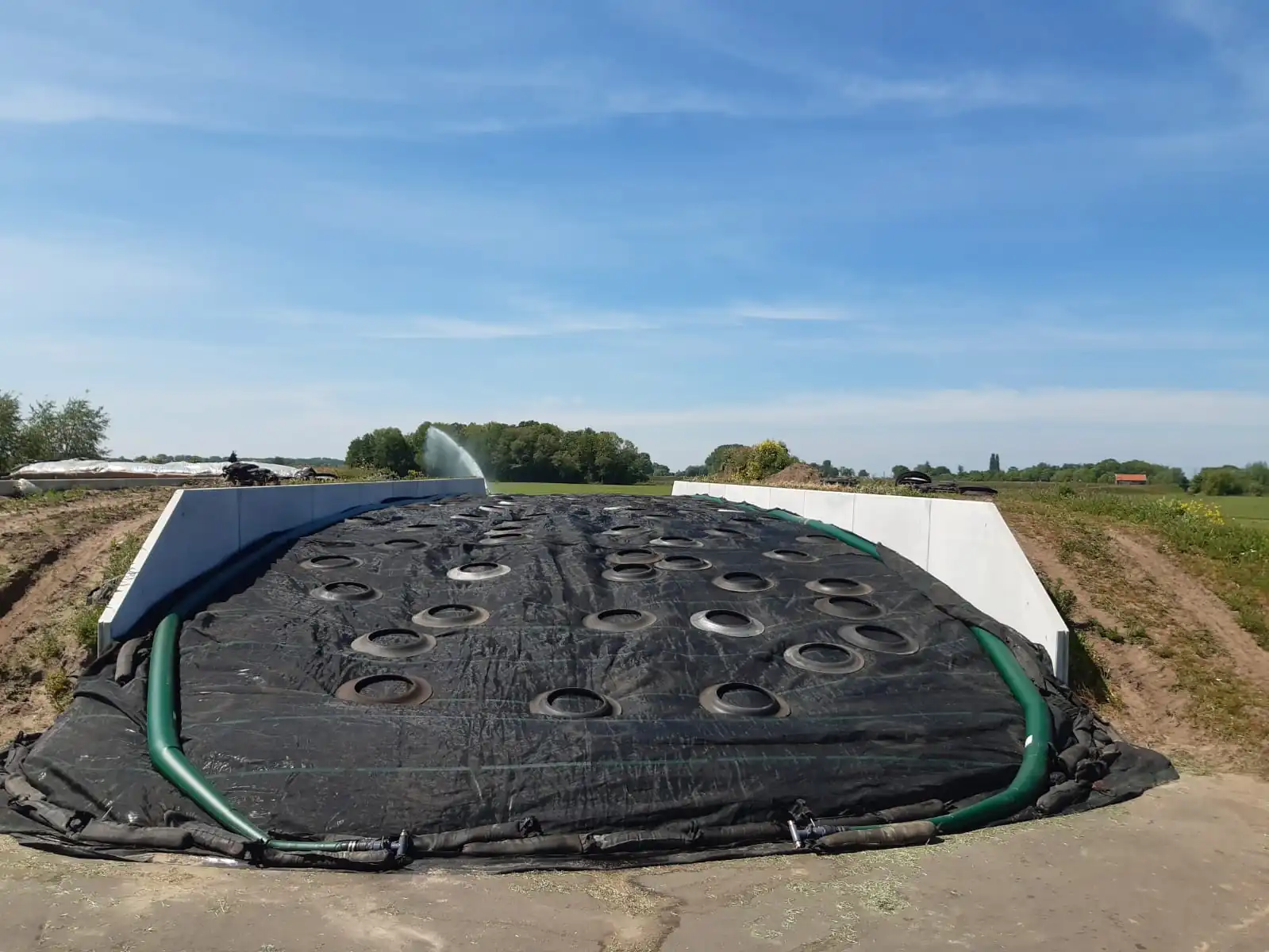
Bosch emphasises that his system isn’t a silver bullet. “If you put enough time and attention into it, covering with sandbags, car tyres and agricultural plastic can work just as well. But if you’re opening and closing those pits frequently, it gets harder. That’s why many farmers rule out lasagna pits for their existing setups.”
He’s convinced that this means opportunities for more consistent roughage quality go untapped. “The silage tubes are a way to change that without a major investment.” The price for a complete set with a 5-metre reel, two silage tubes and all accessories is just under €10,000.
Also check out these posts
Curious what suits
your business?
Get in touch for a no-obligation chat.
We’re happy to think along with you to find a solution that truly works in practice.