

Tips for building a good silo
A well-built silo is essential for safe operations, optimal drainage, and airtight sealing. With the tips below, you can avoid long-term problems and get the most out of your silo.
Our tips
- If the project includes a brine concrete pit, place it at least 1 meter away from the silo. This prevents the silo walls from pressing down on the pit.
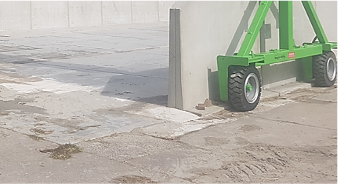
- When using a portal system, we recommend a minimum of 80 cm of hardened surface (concrete or slabs) outside the silo, or walls with a long base. This surface should have a maximum slope of 1%, for proper machine lane function.
- For rail systems, we advise against sloped walls at the front and rear of the silo.
- The silo must be level throughout its length. Across the width, a V-shape is advised for good drainage.
- At the filling side of the silo, ensure a flat strip of 1 meter across the full width. Behind this strip, apply a slope of at least 1%.
- At the front (unloading side), this strip should be used as a break point for the slope, both inward and outward from the silo.
- It is highly recommended to install an extra drainage pit at least 5 meters behind the silo (filling side). This drains rainwater from the cover sheet and the cover basin to the filling side. Ensure the pit is not within 5 meters of the silo to prevent damage or cover interference.
- Place the first separated press juice drain inside the silo, at least 2.5 meters from the start of the silo (unloading side).
- The gutter housing the drainage pits must lie flat and level, in the center of the silo.
- The recommended slope from the silo walls toward the gutter with pits is at least 1.5%. For very wide silos, 1% is sufficient.
- For multiple silos placed side by side, extra drainage pits between the silos are strongly advised. This contributes to a safe and tidy yard.
- All internal corners of the silo walls must have a floor that is even and flush with the concrete wall. This is necessary to ensure hoses lie flat and the silage pile can be sealed airtight. See the example below.
Also check out these posts


Curious what suits
your business?
Get in touch for a no-obligation chat.
We’re happy to think along with you to find a solution that truly works in practice.